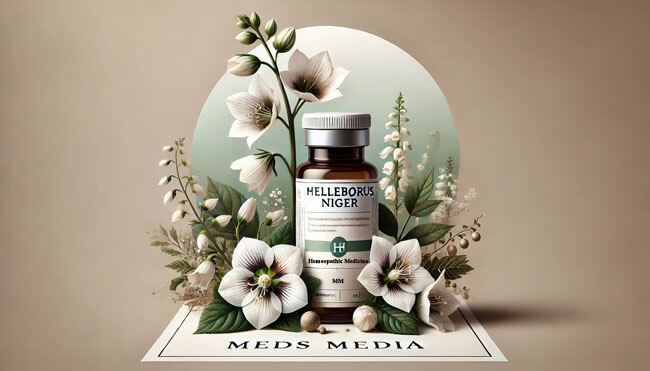

Homeopathy, a holistic system of medicine, offers remedies tailored to individual symptoms and conditions. One such remedy is Helleborus niger, a lesser-known yet potentially impactful treatment for specific diabetic conditions. This guide delves into the role of Helleborus niger in managing diabetes-related emergencies, particularly focusing on its applications for diabetic pre-coma states.
About Helleborus niger
- Derived From: Helleborus niger, commonly known as Christmas Rose, is a perennial herbaceous plant from the Ranunculaceae family. It originates in Central and Southern Europe. The homeopathic preparation is derived from the rootstock of the plant.
- Kingdom: Plantae
Main Indication: Diabetes and Diabetic Pre-Coma
Helleborus niger is primarily indicated for acute diabetic emergencies, especially those related to diabetic pre-coma states. This condition often results from hypoglycemia, arising due to inadequate dietary intake, insulin overdose, or excessive use of oral hypoglycemic agents.
Key Symptoms for Helleborus niger Use in Diabetes
The hallmark symptoms associated with Helleborus niger are primarily neurological and metabolic, which makes it an apt remedy for pre-comatose states in diabetic patients. Below are the key symptoms and characteristics:
- Neurological Symptoms:
- Impaired sensory perception: Patients report blurred vision and diminished hearing capabilities.
- Generalized muscular weakness: The patient may feel extreme lethargy and lack of energy.
- Sighing respiration: Slow and irregular breathing patterns are observed.
- Altered consciousness: The patient is difficult to arouse and may exhibit shrieking or shouting in their altered state.
- Involuntary movements: Notable signs include constant chewing motions of the jaw and a peculiar habit of picking at lips and clothes.
- Hydration and Circulatory Symptoms:
- Greedy water intake: Even in an unconscious state, the patient shows a strong desire to drink water.
- Circulatory signs: The pulse is described as slow, small, and soft, indicative of poor perfusion and circulatory compromise.
- Behavioral and Psychological Signs:
- Agitation: Patients in this state may shriek or shout unexpectedly.
- Emotional instability: Marked by confusion and a lack of coherent responses.
How Helleborus niger Works in Diabetes
Mechanism of Action in Diabetic Pre-Coma:
Helleborus niger addresses neurological and metabolic disturbances caused by severe hypoglycemia. By acting on the nervous system, it restores sensory perception and calms exaggerated reflex actions like jaw chewing and lip-picking. Furthermore, its influence on circulation aids in improving the pulse and alleviating systemic weakness.
Acute or Chronic Conditions:
This remedy is most suitable for acute conditions, particularly hypoglycemia-induced diabetic emergencies. It is not generally recommended for the chronic management of diabetes mellitus.
Type 1 or Type 2 Diabetes:
Helleborus niger can be used in both Type 1 and Type 2 diabetes, provided the patient exhibits the symptomatic profile described. However, its application is more critical in insulin-dependent diabetes (Type 1) where the risk of hypoglycemic pre-coma is higher.
Uses of Helleborus niger for Diabetes
Helleborus niger is specifically used for:
- Managing diabetic pre-coma symptoms due to hypoglycemia.
- Treating neurological impairments linked with altered consciousness in diabetes.
- Supporting hydration and circulation during emergencies.
- Alleviating muscular and systemic weakness during acute diabetic crises.
Contraindications and Precautions
- Not a Primary Treatment: Helleborus niger should be used in conjunction with standard medical interventions during diabetic emergencies.
- Careful Dosage: Homeopathic prescriptions should be individualized and supervised by a qualified practitioner.
FAQs on Helleborus niger for Diabetes
Q1: Can Helleborus niger cure diabetes?
No, Helleborus niger is not a cure for diabetes. It is a remedy for acute hypoglycemic conditions, such as diabetic pre-coma. Regular diabetes management requires insulin or oral hypoglycemic agents.
Q2: Is this remedy safe for children with diabetes?
Helleborus niger may be prescribed for children with diabetes experiencing symptoms of hypoglycemia. However, this should only be done under professional supervision.
Q3: Can Helleborus niger be used for hyperglycemia?
No, this remedy is indicated for hypoglycemia-related symptoms, not for high blood sugar levels.
Q4: How is it administered?
Typically, Helleborus niger is administered in potentized homeopathic dilutions (e.g., 6C, 30C) based on the severity and presentation of symptoms.
Q5: Are there side effects of Helleborus niger?
When used in homeopathic potencies, side effects are minimal or negligible. However, crude forms of the plant are toxic and should not be ingested.